
The Seattle Pivot: A Case Study in Narrative Engineering
On October 14, 2025, Sarah Jenkins sat in a rainy coffee shop in Seattle’s Capitol Hill district, staring at a rejection email. It was her 42nd rejection in three weeks. Sarah, a Senior Project Manager with seven years of experience, possessed a resume that was technically flawless. Her skills were sharp, her certifications current, and her references glowing. Yet, she was invisible.
Sarah was falling victim to a statistic identified by a 2024 LinkedIn Workforce Report, which noted that while applications per job opening had risen by 14% year-over-year, the time recruiters spent reviewing each application had dropped to an average of just 5.8 seconds.
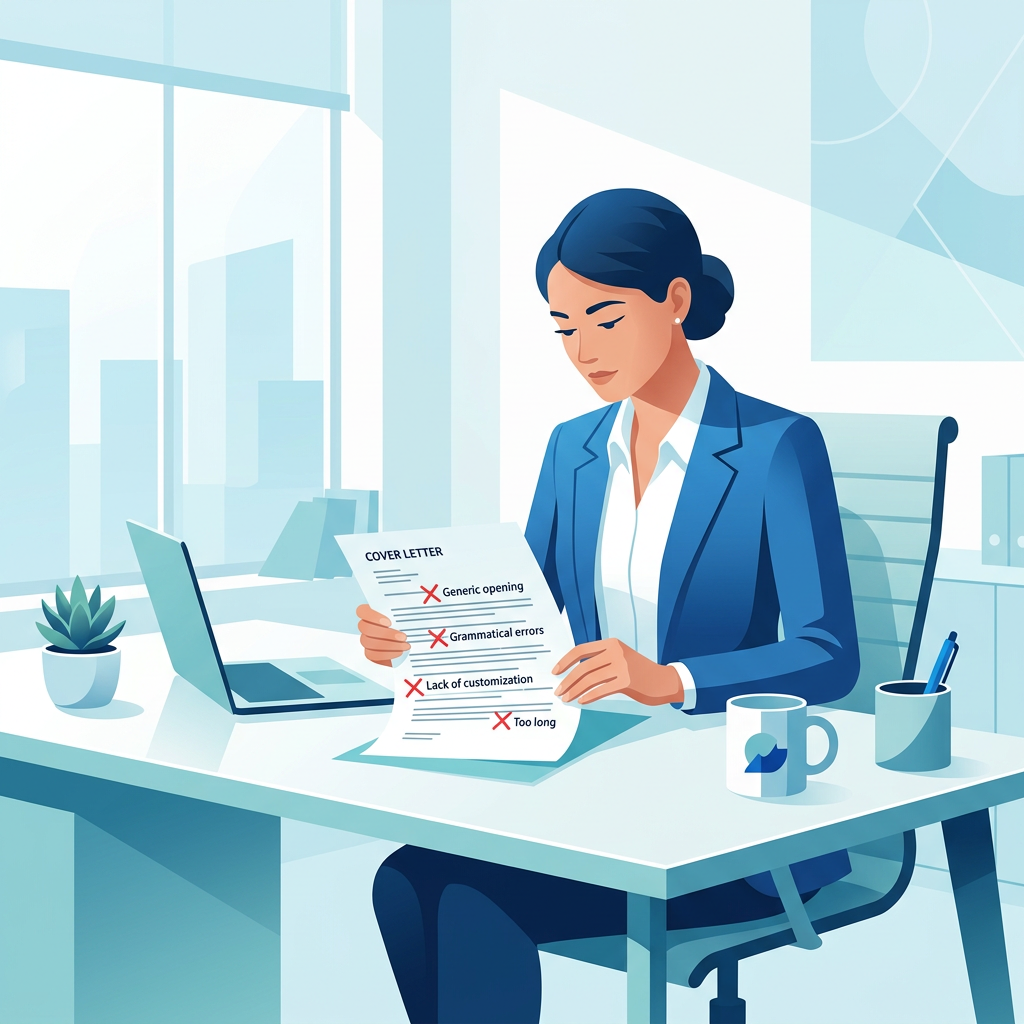
Desperate, Sarah stopped sending the generic job application letter she had been tweaking since college. Instead, she spent three hours researching the specific pain points of a fintech unicorn she admired. She didn't write about her history; she wrote about their future. She opened with a specific anecdote about their recent API integration failure—news she found on a developer forum—and outlined exactly how her framework had solved that identical issue at her previous firm.
Two days later, the VP of Engineering called her directly. She didn't just get an interview; she skipped the initial screening entirely. Sarah was hired three weeks later with a 25% salary increase.
The lesson? In 2026, you are not writing for a person or a machine. You are writing a business proposal disguised as a personal introduction. If you want to know how to write a cover letter that converts, you must stop summarizing your past and start pitching your value.
The New Hiring Landscape: Algorithms Meets Empathy
To understand why traditional advice fails, we must look at the data. The hiring funnel has fundamentally shifted. According to recent research from the Stanford Institute for Human-Centered AI, nearly 85% of Fortune 500 companies now utilize Large Language Models (LLMs) to parse initial applications. These models don't just look for keywords; they analyze sentiment, coherence, and relevance.
However, once you pass the AI gatekeeper, you face a human reader who is more exhausted than ever. A 2025 Glassdoor survey revealed that 72% of hiring managers admit to skimming cover letters, looking solely for "evidence of personality" and "specific problem-solving capabilities."
""The resume tells us if you represent a safe bet. The cover letter tells us if you represent a high-yield investment. We don't read cover letters to check boxes; we read them to feel excitement." — Elena Rodriguez, Head of Talent Acquisition at NexusStream Global.
Therefore, the modern cover letter format must serve two masters: it must be structured enough for the AI to categorize you as a "strong match," and compelling enough to stop a human from clicking "Next."
Anatomy of a 2026 Cover Letter
The days of "I am writing to apply for..." are over. That sentence is essentially white noise. Below is a comparison of the outdated approach versus the modern standard required to stand out.
| Feature | The 2015 "Standard" Letter | The 2026 "Value-Add" Letter |
|---|---|---|
| The Opening | "I am applying for [Role] seen on [Website]..." | A "Hook" identifying a company problem or a relevant achievement. |
| The Body | A chronological summary of the resume. | Two specific anecdotes using the STAR method (Situation, Task, Action, Result). |
| The Tone | Formal, passive, deferential. | Professional, active, peer-to-peer. |
| The Focus | What the company can do for the applicant. | What the applicant can do for the company immediately. |
| The Close | "I look forward to hearing from you." | A Call to Action (CTA) suggesting a specific discussion topic. |
1. The Hook: Grab Them Immediately
Your first sentence is the most expensive real estate on the page. You must disrupt the recruiter's pattern. Here are effective cover letter examples of opening hooks:
- The Passion Hook: "Having used [Product Name] to streamline my workflow for three years, I was thrilled to see the beta launch of your Enterprise tier—and I immediately spotted a user retention opportunity I’ve solved before."
- The News Hook: "When I read in the Wall Street Journal that [Company] is expanding into the SE Asian market, I knew my experience navigating supply chains in Vietnam would be an immediate asset to your logistics team."
- The Connection Hook: "[Name], your Director of Sales, suggested I contact you regarding the Account Executive opening, noting that my background in SaaS churn reduction aligns with your Q3 goals."
2. The Meat: Evidence Over Claims
Harvard Business Review has repeatedly highlighted the rise of "skills-based hiring." This means your pedigree matters less than your proven ability to execute. Do not regurgitate your resume. Your resume lists the what; your cover letter explains the how and the why.
Use your body paragraphs to connect the dots. If you used our resume builder to create a strong bullet point about increasing revenue, use the cover letter to tell the brief story of the late nights and strategic pivots that made that revenue increase possible. This adds depth and authenticity that AI text generators often struggle to replicate convincingly.
Optimization Strategy: Keywords and Formatting
While storytelling is key for the human reader, you cannot ignore the digital gatekeeper. Cover letter tips regarding SEO (Search Engine Optimization) for ATS (Applicant Tracking Systems) are critical.
Weaving in Keywords Naturally
Keyword stuffing—listing words like "Project Management," "Agile," and "Python" randomly—will get your application flagged as spam. Instead, integrate them contextually.
- Bad: "I am good at Python, SQL, and Data Analysis."
- Good: "By leveraging Python scripts to automate our reporting, I reduced the time spent on Data Analysis by 40%, allowing the team to focus on high-level strategy."
This contextual usage signals to the AI that you not only know the keyword but understand its application. When drafting your letter using tools like fullCV.online, ensure you are cross-referencing the job description to identify the high-priority hard skills and soft skills.
The Visual Scan
Recruiters scan in an F-pattern. To accommodate this:
- Use Bullet Points: Break up dense text in the middle of your letter with 3-4 bullet points highlighting key wins.
- Bold Key Metrics: Draw the eye to numbers (e.g., $2M revenue increase, 15% efficiency boost).
- Keep it Brief: The ideal length is between 250 and 400 words. Anything over one page is discarded.
Psychological Triggers: The "T-Shaped" Approach
McKinsey & Company often refers to "T-shaped" employees—those with deep expertise in one area and broad ability to collaborate across others. Your cover letter should reflect this.
- The Vertical Bar (Deep Expertise): Devote one paragraph to your hard skills. If you are a coder, talk about the stack. If you are a marketer, talk about the CPA and ROI. This builds trust.
- The Horizontal Bar (Broad Collaboration): Devote the next paragraph to culture and soft skills. Discuss how you mentored junior staff or how you communicated technical concepts to non-technical stakeholders. This builds likeability.
The Call to Action: Ending with Confidence
Standard advice tells you to be passive. In 2026, confidence wins. Don't just ask for an interview; suggest the value of the conversation.
- Weak: "I hope to hear from you soon regarding this position."
- Strong: "I would welcome the opportunity to discuss how my approach to lean manufacturing could help [Company] achieve its sustainability targets for the upcoming fiscal year. I am available for a brief call next Tuesday or Thursday."
This is known as the "presumptive close." It signals that you view yourself as a consultant offering a solution, not just a subordinate asking for a paycheck.
Conclusion: Your Letter is Your Proxy
In the competitive landscape of 2026, your cover letter is the only part of your application where your voice can actually be heard. It is the bridge between the data on your resume and the human being who will eventually hire you.
By moving away from generic templates and embracing a data-driven, narrative-focused approach, you transform a required document into a compelling argument for your employment. Remember, the goal is not just to fit the job description—it is to fit the company's future narrative.
Ready to build an application that stands out? Ensure your resume matches the high quality of your new cover letter by using the professional tools available at fullCV.online. The future of hiring is here; make sure you are writing for it.