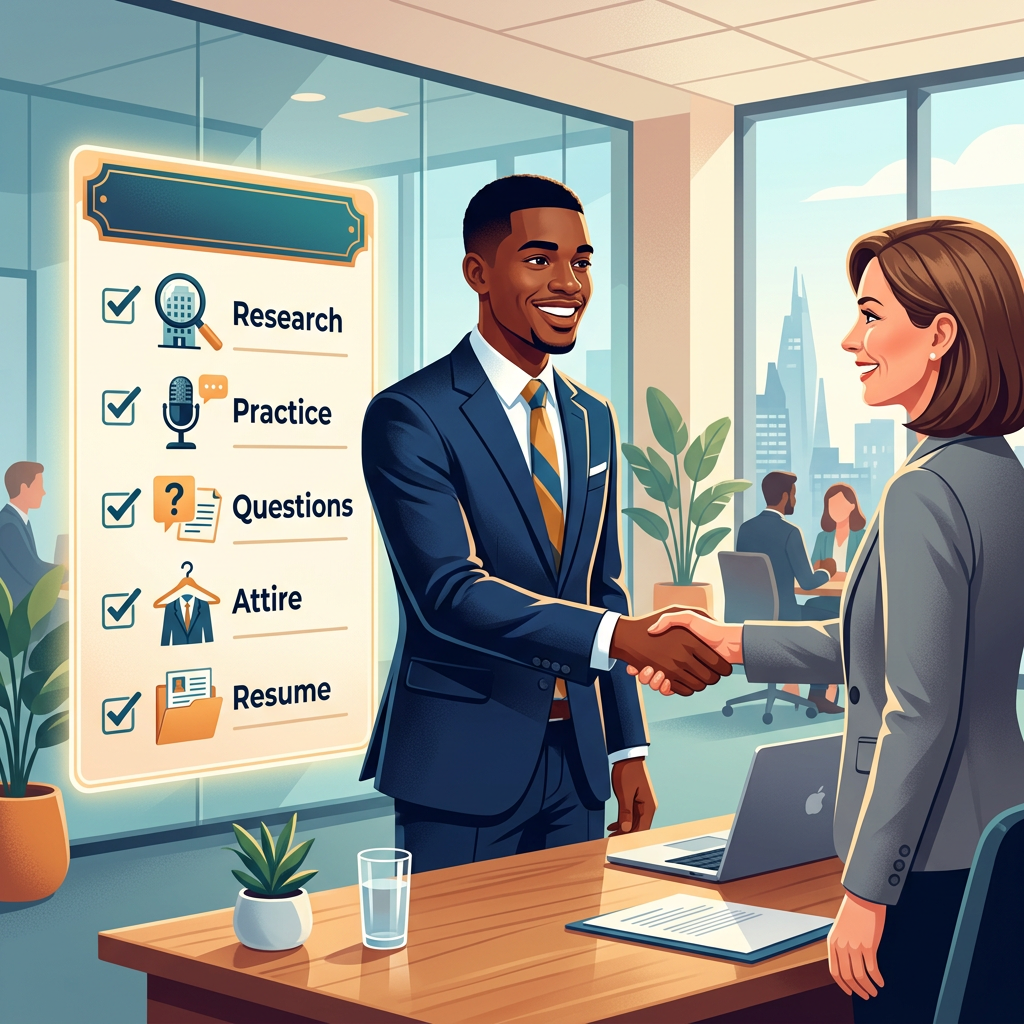

The Day the Interview Changed Forever
In early 2025, Marcus, a senior software engineer with fifteen years of experience, sat down for what he thought was a standard screening call with a Fortune 500 tech giant. Instead of a friendly HR recruiter, he was met with a sleek, minimalist interface and a digital avatar named 'Alex.' Alex didn’t make small talk. It didn't ask about the weather. Instead, it delivered five precisely timed behavioral questions and analyzed Marcus’s micro-expressions, vocal tone, and keyword density in real-time. Marcus, caught off guard, struggled to maintain eye contact with his webcam and stumbled over his words. Despite his stellar credentials, he received a rejection email four minutes after closing the browser.
Marcus’s story is no longer an outlier. According to a 2025 Gartner report, over 82% of enterprise-level organizations have integrated AI-driven video interviewing (AVI) and gamified assessments into their hiring pipelines. By 2026, the 'AI Interview' has become the primary gatekeeper of the modern workforce. To navigate this new landscape, you need more than just a free resume builder; you need a comprehensive strategy to communicate with both man and machine.
The Rise of the Algorithm: Why AI Interviews Are the New Standard
Companies aren't using AI just to be 'tech-forward.' They are using it to solve a massive scalability problem. In 2026, a single remote job posting for a mid-level marketing role can attract upwards of 5,000 applications. Human HR teams cannot physically screen that volume. AI tools like HireVue, Interviewer.ai, and Paradox provide a 'fairer'—or at least more consistent—baseline for evaluating candidates before a human recruiter ever steps in.
These systems don't just 'listen' to your words; they perform a multi-modal analysis of your performance. They look for:
- Sentiment Analysis: Is your tone positive, hesitant, or aggressive?
- Competency Mapping: Does your spoken answer align with the skills listed on your AI resume builder profile?
- Facial Action Coding (FACS): Do your facial movements suggest confidence or cognitive dissonance?
- Prosody: The rhythm, pitch, and volume of your speech.
As you prepare, remember that your digital presence must be as polished as your physical one. Using 30+ ATS-optimized templates ensures that your initial data (your resume) aligns perfectly with what the AI expects to hear during the verbal interview.
Types of AI Interviews You’ll Face in 2026
Not all AI interviews look the same. Depending on the industry and the level of the role, you might encounter several different formats. Knowing which one you're facing is half the battle.
| Interview Type | Primary Technology | What it Measures |
|---|---|---|
| Asynchronous Video (AVI) | Natural Language Processing (NLP) & Vision AI | Communication skills, personality traits, and culture fit |
| Interactive Chatbots | Generative AI & Decision Trees | Basic qualifications, technical knowledge, and availability |
| Gamified Assessments | Neuro-scientific Algorithms | Cognitive load, risk-taking, and problem-solving speed |
| Live AI Shadowing | Real-time Transcription & Analysis | Accuracy of technical answers during a live human interview |
If you are just starting your journey, the best way to ensure your data is 'readable' by these systems is to build your resume using a platform that understands how AI parses information. This creates a data-driven foundation for all subsequent interview stages.
Mastering the 'Bot-Facing' Environment
When interviewing with an AI, your environment is your 'set.' The AI's computer vision is sensitive to shadows, background noise, and distractions. If the AI cannot clearly see your eyes or mouth, it may flag your 'enthusiasm' or 'honesty' scores as low simply because it lacks sufficient data points.
1. Lighting and Framing
Ensure your primary light source is in front of you, not behind. Backlighting creates a silhouette effect that prevents facial recognition software from mapping your expressions. Position your camera at eye level. Looking down at a laptop screen can be interpreted by AI as a lack of confidence or 'avoidant' behavior.
2. The 'Camera-Eye' Connection
This is the hardest habit to break. To the AI, looking at the person’s face on your screen looks like you are looking down. To maintain 'eye contact' with the algorithm, you must look directly into the camera lens. This ensures the FACS (Facial Action Coding System) registers your engagement correctly.
3. Audio Clarity and Keyword Density
AI interviews rely heavily on voice-to-text transcription. If your audio is muffled, the NLP (Natural Language Processing) engine will miss your high-value keywords. Use a dedicated microphone if possible and speak at a steady, moderate pace. This is where your preparation on our career blog pays off—knowing which industry-specific terms to emphasize is crucial.
The STAR 2.0 Method: Optimizing for NLP
You likely know the STAR method (Situation, Task, Action, Result). In 2026, we use STAR 2.0, which focuses on 'Keyword Anchoring.' Because the AI is looking for specific competency matches, you must anchor your results in the exact terminology used in the job description.
""The secret to beating an AI interview isn't pretending to be a robot; it's being the most structured version of a human. The algorithm values logic, progression, and quantifiable outcomes above all else." — Dr. Elena Rodriguez, Lead Industrial Psychologist at AI-Hire Metrics.
For example, if the job description mentions 'cross-functional leadership,' your 'Action' section must explicitly use that phrase. The AI is essentially running a real-time 'Control+F' on your spoken words. If you've used a professional resume tool to identify these keywords during your application phase, keep that list next to your camera during the interview.
Data-Driven Performance: What the Numbers Say
Recent studies from the MIT Initiative on the Digital Economy suggest that candidates who practice with AI-mock tools improve their 'pass rate' for the first round by nearly 40%. The machine favors consistency.
| Metric Analyzed | Importance Weight (Avg) | How to Optimize |
|---|---|---|
| Keyword Relevance | 45% | Use exact phrases from the JD |
| Vocal Pitch Variety | 15% | Avoid monotone; use natural inflection |
| Facial Symmetry/Engagement | 20% | Smile at the start/end; maintain eye contact |
| Answer Structure | 20% | Use clear transitions (First, Second, Finally) |
Success starts with a strong application. You can create your CV now to ensure your professional history is structured in a way that matches these AI expectations from day one.
How to Handle 'The Curveballs'
AI interviews in 2026 often include 'situational judgment' tasks that are timed. You might be given 30 seconds to read a prompt and 60 seconds to respond.
- Don't Panic at the Silence: If you finish early, don't fill the space with 'um' and 'uh.' The AI measures 'filler word frequency.' Simply say, 'That concludes my answer,' and click the next button.
- The Power of the Pause: Taking 5 seconds to think after a prompt is actually viewed positively by many algorithms as it indicates 'thoughtful processing' rather than 'rehearsed scripting.'
- Technical Glitches: If the software freezes, most AI platforms have a 'report issue' button. Do not just close the browser. The metadata of your session is tracked; a sudden exit without a report can be logged as a 'forfeit.'
Aligning Your Resume with Your Interview Performance
A common reason candidates fail AI interviews is 'Profile Dissonance.' This happens when a candidate’s resume claims one level of expertise, but their AI-evaluated communication level suggests another. To prevent this, ensure your manage your CVs section is always updated with your most recent achievements and certifications.
If you mention you are 'Expert in Python' on your CV, the AI will likely trigger a harder set of technical NLP questions during your session. Be honest and ensure your affordable plans for resume exports (starting at just $3.99) are used to create specific versions of your CV for every role you target. This creates a cohesive data trail that the AI can easily verify.
The Ethical Side of AI Hiring: What You Should Know
It is important to note that by 2026, many regions (including the EU and several US states like New York and California) have passed 'AI Transparency' laws. You have the right to know:
- If AI is being used to evaluate you.
- What traits are being measured.
- How to request a human review if you feel the AI was biased (e.g., due to a disability or neurodivergence).
If you feel uncomfortable with an AI-only process, check the company's FAQ. Many top-tier firms allow you to opt-out in favor of a human recruiter, though this may delay your application process.
Final Checklist for Your 2026 AI Interview
Before you hit 'Start' on that interview link, run through this final checklist to ensure you are ready to impress the algorithm:
- Device Check: Is your laptop plugged in? Never run an AI interview on battery power; the processing power required for real-time video analysis can drain a battery and cause lag.
- Internet Stability: Use a wired connection if possible. Lag in your video feed can cause the AI to misinterpret your facial expressions as 'jittery' or 'nervous.'
- Keyword Cheat Sheet: Have a physical sticky note behind your camera with 5 key skills you need to mention.
- Resume Sync: Review the CV you built using the start your resume tool. The AI has already 'read' this document; your verbal answers should expand on it, not contradict it.
- The 'Human' Element: At the end of the day, remember that a human will eventually watch the top-rated clips. Don't lose your personality. Smile, show passion, and be authentic.
Conclusion: Winning in the Age of AI
The job market of 2026 is faster, more data-driven, and more automated than ever before. While the idea of being 'judged by a bot' can be intimidating, it also provides a unique opportunity. By understanding the rules of the algorithm, you can optimize your performance in a way that was never possible with human recruiters alone.
Treat the AI as a partner in your career journey. Use it to refine your pitch, and use tools like fullCV.online to ensure your professional branding is bulletproof. Whether you are using our professional resume tool for the first time or managing a decade of experience on your resume dashboard, the key to success is preparation.
Ready to land that next role? Start by building an AI-ready CV today and show the algorithms—and the humans—exactly what you’re capable of.