In early 2025, Marcus Chen, a Senior Product Manager in Seattle, found himself part of a massive tech layoff. Despite a decade of experience, his inbox remained silent for weeks. He realized that while his resume was solid, his digital footprint was invisible. After implementing a data-driven LinkedIn overhaul—treating his profile as a high-conversion landing page rather than a static document—Marcus saw a 400% increase in recruiter inquiries within 14 days. He didn't just find a job; he was headhunted for a Director role with a 30% salary bump.
Marcus's story isn't an anomaly. According to LinkedIn's 2025 Global Talent Trends report, 94% of recruiters now use the platform not just to source candidates, but to verify their 'brand authority' and cultural fit. In 2026, simply having a profile is the bare minimum. To win in this market, you need a comprehensive professional resume tool and a LinkedIn presence that works for you while you sleep. This guide will show you how to master the LinkedIn algorithm and build a personal brand that commands attention.
Why LinkedIn Optimization is the 'New Resume' in 2026
The job market has undergone a fundamental shift. We have moved from the 'Information Age' to the 'Verification Age.' Recruiters are no longer satisfied with what you say about yourself on a two-page PDF; they want to see your expertise in action. A McKinsey 2025 study highlighted that 'Skills-First Hiring' has increased by 70% year-over-year, with LinkedIn being the primary ecosystem where these skills are validated.
In 2026, the LinkedIn algorithm has evolved to prioritize 'meaningful engagement' and 'topical authority.' This means that your profile must be optimized for both the human eye and the AI-driven search filters used by talent acquisition teams. Before you even think about hitting 'Apply,' you must build your resume to ensure your offline and online personas are perfectly synchronized.
The Rise of AI-Powered Sourcing
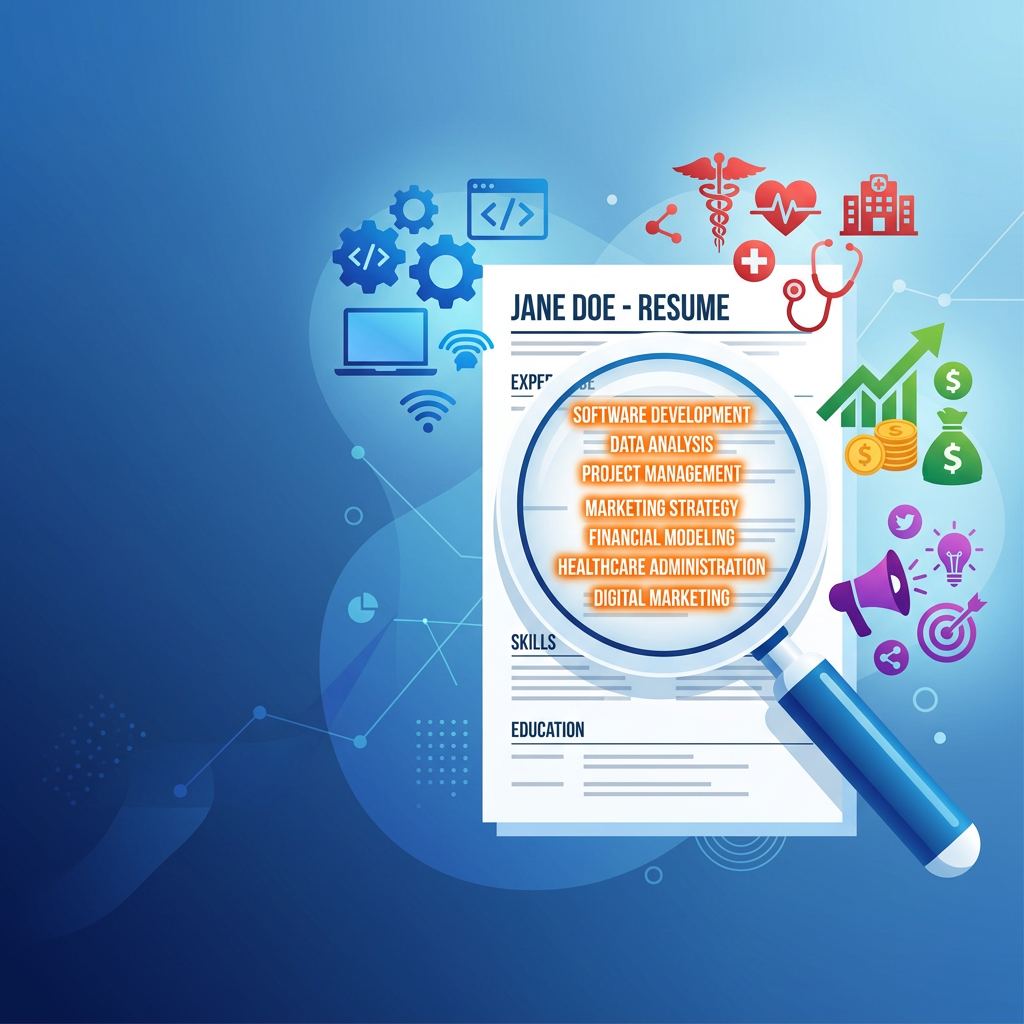
Recruiters in 2026 use advanced AI tools that scan LinkedIn profiles for semantic keywords, not just exact matches. If your profile says 'Digital Marketing' but lacks secondary keywords like 'Growth Hacking,' 'Retention Strategies,' or 'ROAS Optimization,' you may be invisible to the very people looking to hire you.
The Anatomy of a High-Converting LinkedIn Profile
To stand out, every element of your profile must be intentional. Let’s break down the essential components you need to master.
1. The Visual Power Couple: Headshot and Banner
Your headshot is your first impression. In 2026, high-resolution, professional photos are non-negotiable. Use a neutral background and ensure you are looking directly at the camera.
Your banner, however, is your billboard. Do not leave it as the default LinkedIn blue. Use this space to showcase your 'Value Proposition.' Are you a software architect? Show a clean, aesthetic workspace or a complex system diagram. Are you a speaker? Show yourself on stage. Integrating your personal brand here sets the tone for the rest of the profile. When you use 30+ ATS-optimized templates for your resume, you should aim for a similar level of visual consistency on your social profile.
2. The Headline: More Than a Job Title
Your headline follows you everywhere on the platform. If it just says 'Project Manager at XYZ Corp,' you are wasting valuable real estate.
The 2026 Formula: [Job Title] | [Key Accomplishment/Specialty] | [Specific Value You Deliver]
Example: Senior Data Analyst | Transforming Complex Big Data into 20% Revenue Growth | Python, SQL, Tableau Expert
3. The 'About' Section: Your Career Narrative
This is where most people fail. They write in the third person or copy-paste their resume summary. In 2026, the 'About' section should be a first-person narrative that solves a problem for the reader.
""Your LinkedIn 'About' section is not a biography; it's a sales page where the product is your expertise. Start with a hook, define the problem you solve, and end with a clear Call to Action (CTA)."
To help craft this narrative, using an AI writing assistant can provide the structural foundation you need to ensure your tone is both professional and engaging.
| Profile Element | Purpose in 2026 | Optimization Goal |
|---|---|---|
| Headline | SEO & First Impression | Include 3 core keywords and your UVP |
| About | Narrative & Engagement | Tell a story; 50% increase in dwell time |
| Experience | Proof of Impact | Use STAR+L method (Situation, Task, Action, Result + Learning) |
| Skills | Algorithmic Ranking | List 50 skills; get at least 3-5 endorsements for top 3 |
| Featured | Social Proof | Link to portfolios, articles, or your professional profile pages with analytics |
Leveraging AI for Profile Authority and SEO
In 2026, SEO isn't just for Google; it’s for the LinkedIn search bar. Recruiters use 'LinkedIn Recruiter' (a premium tool) to filter candidates by specific skill clusters. To rank at the top of their search results, you must strategically place keywords throughout your profile.
Semantic Keyword Placement
Don't just keyword stuff. Distribute your primary keywords naturally in:
- Your Headline (Highest weight)
- Your 'About' section (Medium weight)
- Your Experience descriptions (High weight for recency)
- Your Skills list (Critical for filtering)
If you are struggling to identify the right keywords for your industry, check out our career resources for deep dives into specific sector requirements.
Using AI to Refine Your Tone
AI tools are now sophisticated enough to help you 'voice-match.' You can feed your current experience into a tool and ask it to 'Rewrite this for a Vice President level of seniority.' This ensures that while you are applying for high-paying roles, your language matches the expectations of the C-suite. Remember, professional exports of your documents are starting at just $3.99, making it an affordable investment for a massive career leap.
Strategic Networking and Content Creation
A static profile is a dead profile. In 2026, the 'Invisible Network' is where the best jobs live. These are the roles that are never posted on job boards because they are filled through referrals and 'inbound' interest.
The 80/20 Content Strategy
You don't need to be an 'influencer' to benefit from content. Follow the 80/20 rule: 80% of your activity should be engaging with others, and 20% should be original posts.
- Engage: Comment on the posts of industry leaders. Don't just say 'Great post!' Add value. Ask a question. Offer a counter-perspective. This puts your name and headline in front of their entire network.
- Post: Share 'Insights over Information.' Instead of sharing a news article, share your take on the news article. This builds your reputation as a thought leader.
The Power of Recommendations
In the age of AI-generated content, human testimonials are gold. Aim for two 'Give' and one 'Receive' every month. A recommendation from a former supervisor that mentions a specific project and your unique contribution is worth more than a dozen skill endorsements.
Integrating Your CV and LinkedIn Profile
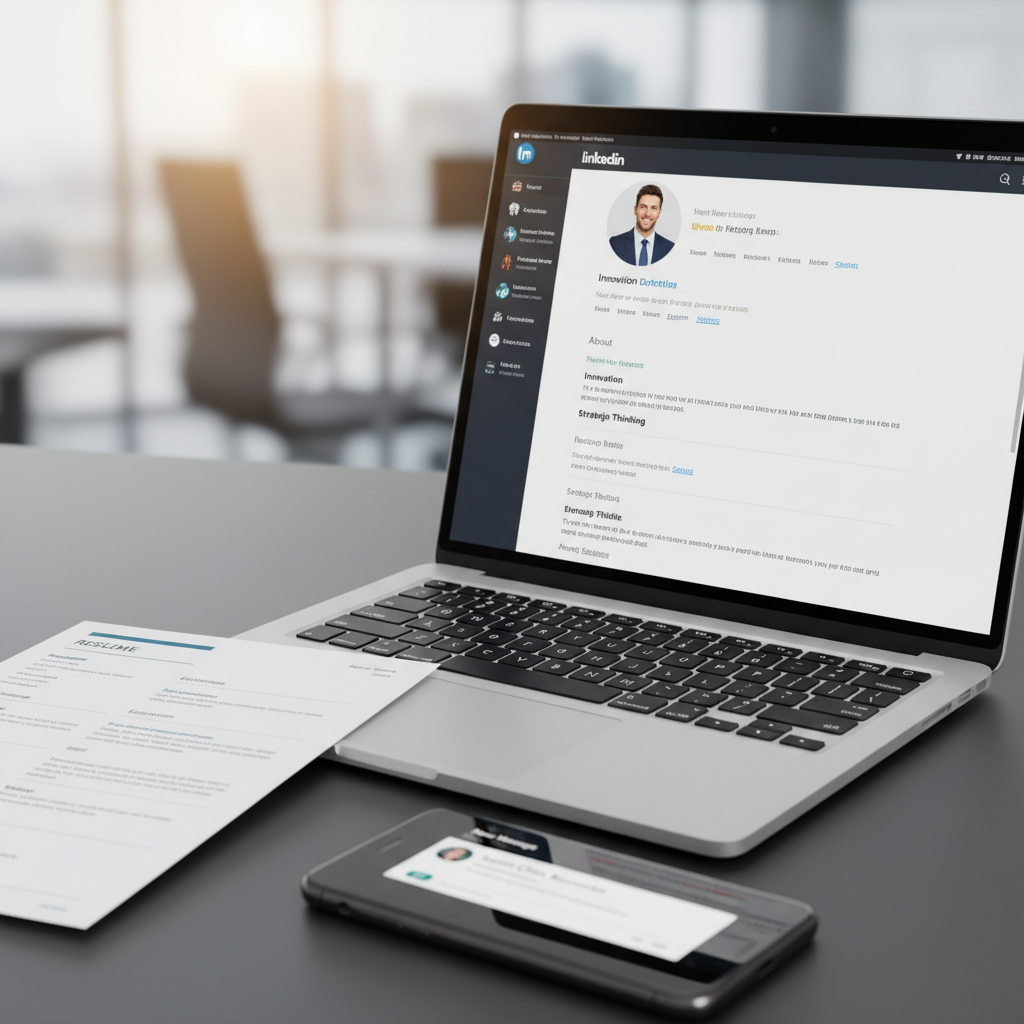
One of the biggest mistakes job seekers make is having a total disconnect between their LinkedIn profile and their resume. If a recruiter clicks the link on your CV and finds a LinkedIn profile that looks like it hasn't been updated since 2022, you lose all credibility instantly.
Synchronization is Key
Ensure your dates, titles, and key achievements match across all platforms. Use your resume dashboard to manage multiple versions of your CV, ensuring that whichever one you send out, it aligns with your public-facing LinkedIn persona.
LinkedIn also allows you to link to external documents. Instead of uploading a static PDF that might go out of date, use shareable CV links from your profile. This allows you to update your CV in real-time, so the recruiter always sees the most current version of your professional history.
| Resume Feature | LinkedIn Counterpart | How to Sync |
|---|---|---|
| Professional Summary | About Section | Resume is concise; LinkedIn is a narrative |
| Work Experience | Experience Section | Match titles and dates exactly; expand on projects on LinkedIn |
| Key Skills | Skills & Endorsements | Use LinkedIn to 'prove' the skills listed on your CV |
| Education & Certs | Education / Licenses | Add digital badges to LinkedIn for instant verification |
| Portfolio Links | Featured Section | Ensure links are active and lead to high-impact work |
Advanced LinkedIn Settings for the 2026 Market
There are several 'hidden' settings that can significantly impact your visibility.
1. The 'Open to Work' Toggle
Use this, but use it wisely. You can set it so only recruiters see the 'Open to Work' badge. This prevents your current employer from seeing your job search while signaling to headhunters that you are ready for a conversation.
2. Custom URL
If your LinkedIn URL ends in a string of random numbers, change it immediately. A clean URL like linkedin.com/in/yourname looks professional and is easier to include on your free resume builder documents.
3. Public Profile Visibility
Ensure your profile is visible to 'Everyone.' Many users accidentally restrict their profile so that only 1st-degree connections can see their full experience. If a recruiter can't see your accomplishments, they won't reach out.
4. Career Break Feature
In 2026, career breaks for travel, caregiving, or upskilling are normalized. Use LinkedIn’s official 'Career Break' feature to explain gaps in your timeline. This is far better than leaving a mysterious two-year silence on your profile.
Frequently Asked Questions (FAQ)
How often should I update my LinkedIn profile?
You should do a 'deep clean' once every quarter. Update your latest projects, add new skills, and swap out your 'Featured' content. However, your headline should be updated any time you achieve a significant milestone.
Is LinkedIn Premium worth it in 2026?
If you are actively job hunting, yes. The 'InMail' feature allows you to bypass the 'Connect' request and message hiring managers directly. It also provides 'Competitive Insights,' showing you how you rank against other applicants for a specific role.
Should I include my LinkedIn link on my resume?
Absolutely. In fact, if you don't create your CV now with a prominent link to your LinkedIn profile, you are likely being filtered out by modern ATS systems that look for social validation.
Conclusion: Your Digital Transformation Starts Today
In 2026, your LinkedIn profile is more than just an online CV; it is your professional heartbeat. It is where your reputation lives, where your network grows, and where your next big opportunity will likely originate. By optimizing your headline, mastering the 'About' section, and leveraging the power of AI-assisted writing, you position yourself at the top of the talent pool.
Don't let your hard work go unnoticed. Pair your optimized LinkedIn presence with a world-class resume. Using a free resume builder ensures that when that recruiter finally clicks through from your profile to your application, they are met with a consistent, professional, and high-impact document that closes the deal.
Your next career breakthrough isn't just about what you know; it's about who can find you and what they see when they do. Take control of your narrative today.