
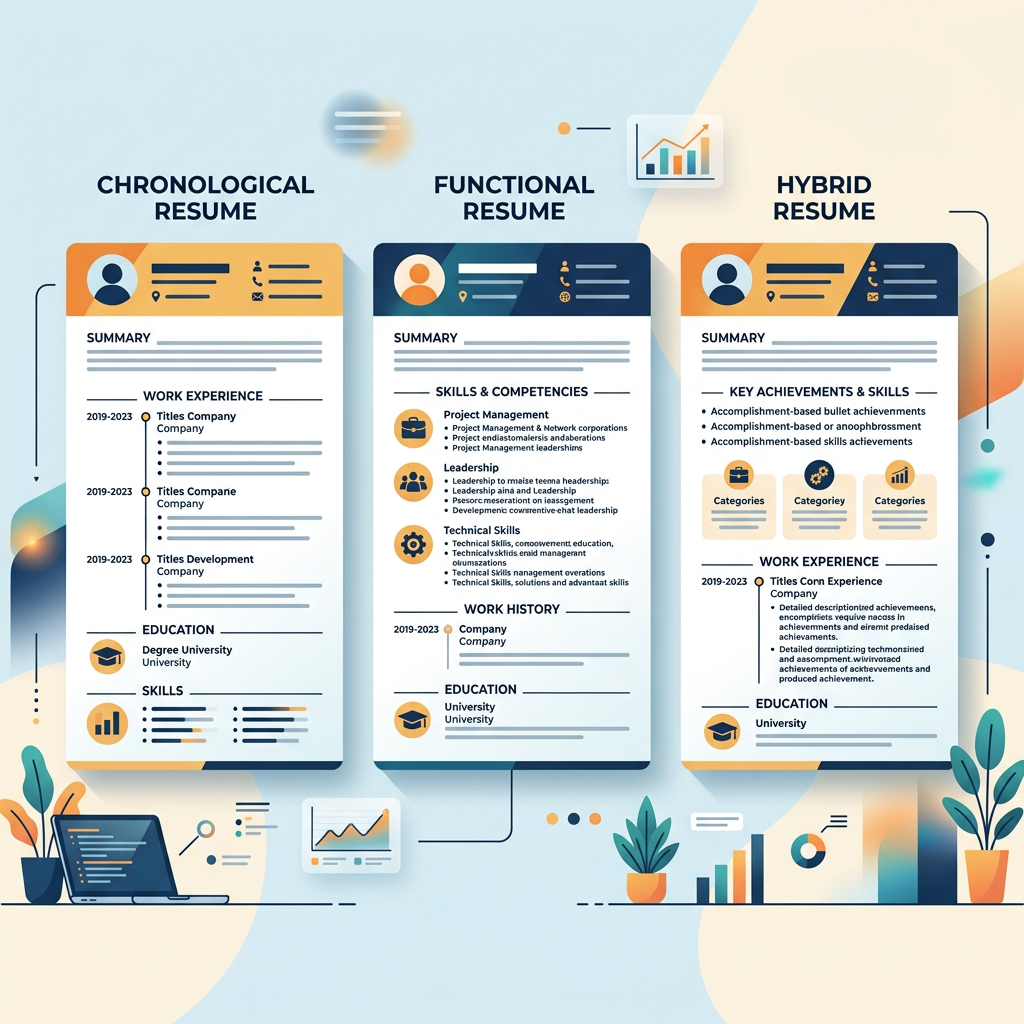
Format Matters More Than You Think
You could have the perfect content on your resume, but if it's in the wrong format, it won't work. The structure of your resume determines:
- How ATS systems parse your information
- What recruiters see first in their 6-second scan
- Whether your strengths or weaknesses stand out
Let's break down the three main formats and when to use each.
Format 1: Reverse-Chronological
What it is
Lists your work experience from most recent to oldest. Each role includes your title, company, dates, and achievement bullets.
Best for
- Candidates with a clear, progressive career path
- People staying in the same industry
- Anyone with no significant employment gaps
Why ATS loves it
ATS systems are built to parse chronological resumes. Job titles, company names, and dates are in predictable locations. This format has the highest parse accuracy.
Why recruiters love it
It tells a clear story. Recruiters can instantly see your trajectory — where you started, how you progressed, and where you are now.
Example structure
- Professional Summary
- Work Experience (reverse chronological)
- Education
- Skills
- Certifications / Extras
Verdict: If you have a straightforward career path, this is your format. It's the default for a reason.
Format 2: Functional (Skills-Based)
What it is
Organizes your resume by skill categories rather than job history. Work experience is listed briefly at the bottom without detailed bullets.
Best for
- Career changers repositioning for a new industry
- Candidates with significant employment gaps
- People with diverse, non-linear experience
The problem
Most recruiters and nearly all ATS systems dislike functional resumes. They can feel like you're hiding something. ATS parsers often fail to extract structured data from this format.
When it works
When your skills are genuinely more relevant than your job titles, and you're applying through a referral or direct contact (bypassing ATS).
Verdict: Use with caution. The hybrid format (below) is almost always a better choice.
Format 3: Hybrid (Combination)
What it is
Combines the best of both worlds. Starts with a skills/competency section, followed by a chronological work history with detailed bullets.
Best for
- Career changers who still want to show work history
- Senior professionals with diverse skill sets
- Anyone who wants to highlight skills while maintaining chronological credibility
Why it works
You get the skills-first impact of a functional resume with the ATS-compatibility and credibility of a chronological format.
Example structure
- Professional Summary
- Core Competencies / Key Skills
- Work Experience (reverse chronological with bullets)
- Education
- Certifications
Verdict: The most versatile format. Recommended for most candidates who don't fit the standard chronological mold.
Quick Decision Matrix
| Your Situation | Best Format |
|---|---|
| Steady career growth in same field | Chronological |
| Career changer | Hybrid |
| Employment gaps | Hybrid |
| Senior executive (15+ years) | Hybrid |
| Recent graduate | Chronological |
| Freelancer/consultant | Hybrid |
| Military to civilian | Hybrid |
| Applying via referral only | Functional (acceptable) |
What About ATS Compatibility?
All three formats can work with ATS, but compatibility varies:
- Chronological: 95%+ parse rate across ATS systems
- Hybrid: 85-90% parse rate (depends on structure)
- Functional: 60-70% parse rate (often loses work history data)
Regardless of format, use fullCV.online's ATS-tested templates to ensure your resume parses correctly. Every template — chronological, hybrid, and creative — is verified against major ATS platforms.
Let the Template Handle the Format
You don't need to build a resume format from scratch. fullCV.online offers 30+ templates across all three formats. Pick the one that matches your situation, fill in your content, and the template handles the structure.
The AI assistant can even recommend the best format based on your experience and target role.
Don't Overthink It
Format is important, but content is king. Choose the right structure for your situation, then focus your energy on writing compelling, achievement-driven content.